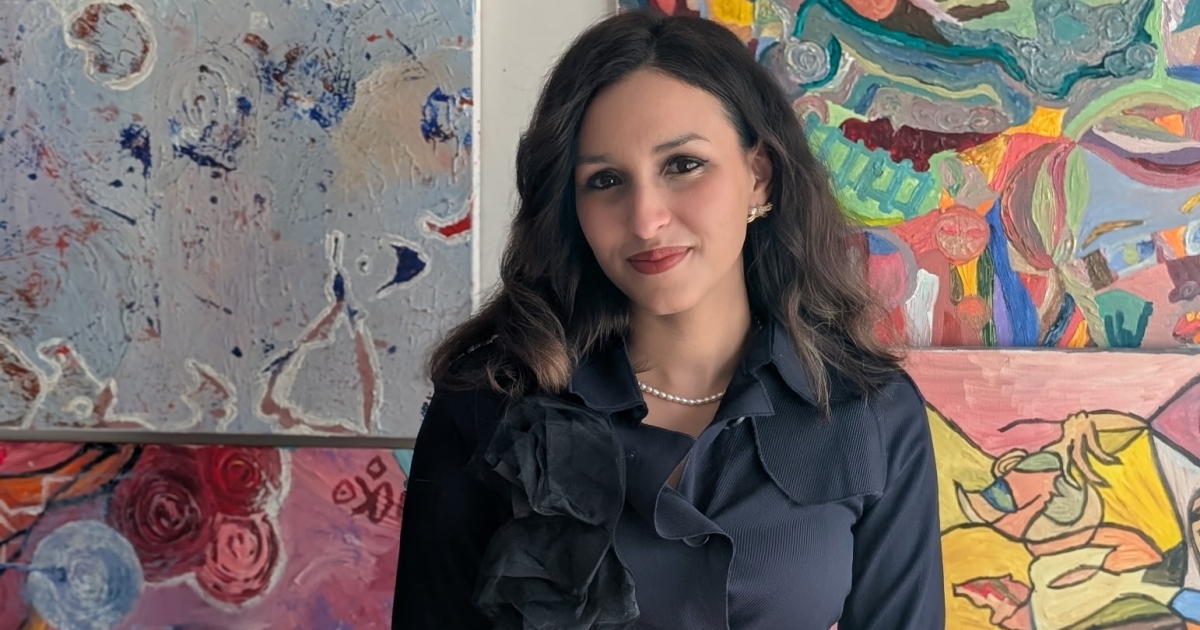
“Transformation, Duality, and Identity in Motion”
Moroccan-American artist Kawtar Lourhraz creates paintings that explore identity, feminine resilience, and emotional transformation through a distinctive visual language that bridges abstraction and figuration. In this interview, Kawtar reflects on the cultural influences that have shaped her artistic voice, the women who continue to inspire her work, and the journey that led her from engineering to becoming a full-time artist. She also shares her thoughts on mentorship, creativity, and the enduring search for home across cultures.
Q: How has growing up in Morocco and later living in the United States shaped your understanding of identity and belonging?
A: Growing up in Morocco and later living in the United States have shaped my understanding of identity as something fluid and constantly evolving. In Morocco, my sense of self was deeply rooted in culture, community, and connection to the land, particularly through my Amazigh heritage.
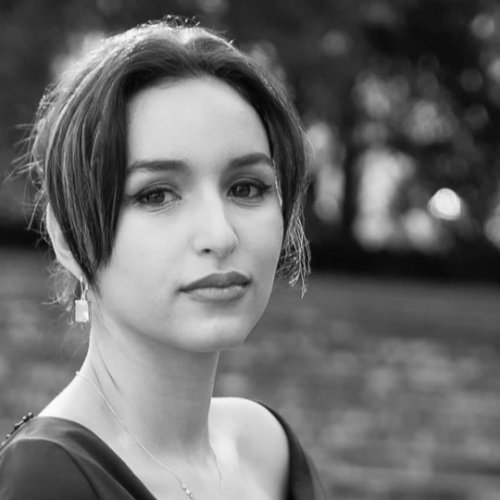
Kawtar Lourhraz
Artist
Kawtar Lourhraz is a Moroccan-American figurative painter whose work explores feminine resilience, identity, and emotional transformation. With a background in engineering and social impact initiatives, Lourhraz brings a structural and human-centred sensibility to her artistic practice.
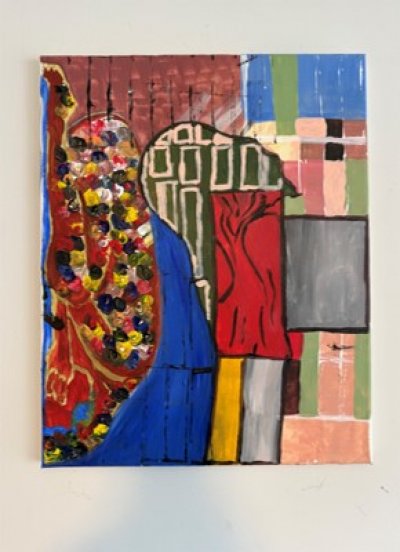
Trained in engineering, she developed a deep understanding of systems, balance, and construction principles that now inform her painting process. She builds her canvases architecturally, layering texture, weight, and movement to create compositions that feel both intentional and intuitive. Thick impasto surfaces and palette knife gestures give her figures physical presence and structural strength.
Alongside her technical education, Lourhraz has been involved in social and community-focused initiatives, experiences that shaped her awareness of vulnerability, displacement, and resilience particularly in women’s lives. These themes surface in her work through upward gazes, exposed forms, and bodies emerging from dynamic fields of colour.
Rooted in Moroccan heritage and shaped by American life, Lourhraz’s work reflects layered identity. Her paintings blur abstraction and figuration, positioning women not as passive subjects, but as forces of becoming grounded, sovereign, and evolving.
Today, as an American, I celebrate both my Moroccan and American cultures and appreciate the unique perspectives each has given me. I also speak French fluently, and because French language and culture were an important part of my education and upbringing, I identify with that cultural influence as well. Living across different cultural spaces has taught me that identity is not limited to a single nationality, language, or tradition. Instead, it is shaped by the many experiences, communities, and values that become part of who we are.
Q: Are there memories or experiences from Morocco that continue to influence your artistic vision today?
A: My memories of Morocco remain central to my artistic vision. Growing up in Amazigh culture in the Souss region, I was surrounded by a visual and emotional language expressed through patterns, textures, silence, and strength. The presence of women, the rhythms of daily life, and the symbolism embedded in tradition continue to influence my work. I don’t recreate these memories literally; I translate them emotionally into colour, form, and atmosphere.
Q: Your work centers women’s identity and emotional experience. What first inspired you to explore these themes?
A: I was first inspired by the women around me while growing up. Their strength, resilience, and emotional depth—often expressed quietly—shaped my understanding of womanhood and became a central theme in my work.
Many of my paintings draw from my own family history. In Hada Bent Brahim, I explored the life of my paternal grandmother, whom I never met. She was a nomadic Amazigh woman from the Ait Zekri tribe who endured great hardship while raising many children. Through this work, I reflected on themes of pain, sacrifice, and limited choices while honouring her determination to educate her children. The opportunities I have today are, in many ways, the result of her efforts.
I also pay tribute to my mother and maternal grandmother, both from Essaouira, who raised and inspired me. The city of Essaouira appears throughout my work as a symbol of memory, belonging, and cultural heritage. Through my paintings, I seek to give visibility to women’s stories, emotions, and experiences that are often left unspoken.
Q: How do you challenge or reimagine the way women are traditionally represented through visual storytelling?
A: I challenge traditional representations of women by shifting the focus away from appearance and toward emotional truth. My work is less concerned with how women are viewed by others and more interested in their inner worlds, memories, and lived experiences. Rather than portraying women as objects of observation, I seek to represent them as complex, layered, and deeply human.
Through colour, texture, and atmosphere, I create spaces that invite reflection and emotional connection.
My paintings draw on personal and collective memory, exploring themes of identity, resilience, inheritance, and belonging. This approach has been featured in the Moroccan cultural magazine Madarat Al Thaqafia, which highlighted my artistic practice and exploration of women’s experiences. By centering interior experience, I aim to offer a more nuanced and authentic vision of womanhood.
Q: You move between fine art and conceptual visual work. How do you decide which medium best expresses an idea?
A: The idea always determines the medium. Some emotions require a tactile, painterly approach, while others need conceptual distance. I don’t force ideas into a medium; I allow them to reveal how they want to exist.
Q: Can you describe how a personal emotion or memory evolves into a finished artwork?
A: A finished artwork usually begins with a feeling or memory that stays with me rather than a fully defined concept. Over time, that emotion gradually takes shape through sketches, colour choices, and composition. The process is intuitive, and I often come to understand the feeling more clearly through the act of creating itself.
My relationship with colour began in childhood. My father taught me artistic techniques from an early age and encouraged me to experiment with colour as a form of expression. His guidance helped me develop a deep appreciation for the emotional power of color, which remains central to my work today. As I paint, personal memories and emotions are transformed into visual forms, allowing me to communicate experiences that can be difficult to express in words.
Q: How has the experience of living between cultures influenced your creative voice?
A: Living between Morocco and the United States has shaped both my identity and my creative voice. In North Carolina, while working in engineering at Cummins, I was navigating structure, logic, and technical discipline alongside a deeply emotional and cultural inner world rooted in Amazigh identity.
This duality became central to my artistic voice. My work exists in the space where structure meets intuition and where different cultural languages constantly intersect.
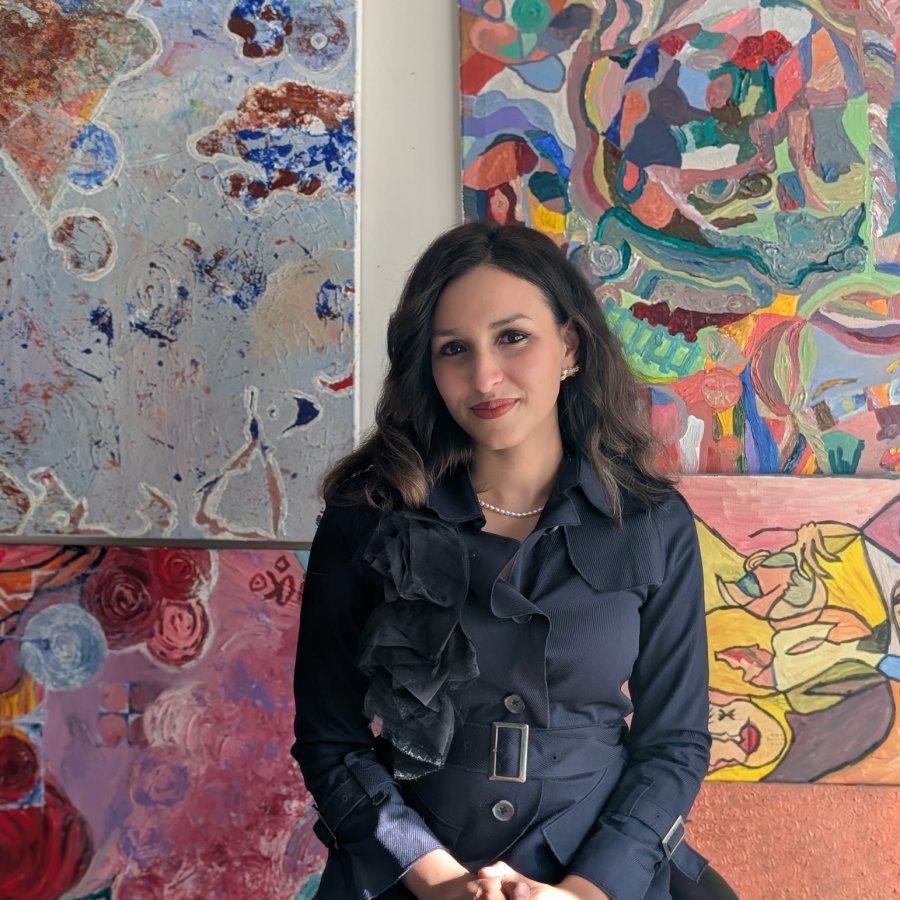
Q: What does the idea of “home” mean to you now as an artist living between Morocco and the United States?
A: Home is no longer a fixed location for me. It exists in memory, language, emotion, and ritual. It can be found in the creative process, in connection, and in moments of reflection. I carry home with me rather than returning to it.
Q: You’ve spoken about the importance of mentorship and supportive creative spaces. How have those experiences shaped your development as an artist?
A: Mentorship and supportive communities have played an important role in my development, both personally and professionally. While I was still living in Morocco, I was selected as a mentee with the Global Thinkers Forum.
That experience broadened my perspective and helped me develop the confidence to express my ideas more clearly.
It also taught me the importance of building a global profile while remaining authentic to my values, culture, and aspirations. Being exposed to mentors and leaders from different backgrounds encouraged me to think beyond geographical boundaries and envision a broader path for my future.
Before pursuing art full-time, I worked as an engineer and was honored to be selected by the Society of Women Engineers to represent North Carolina. I also had the opportunity to meet Congressman Ted Budd and speak before Congress about the importance of women’s representation in engineering. That experience reinforced my belief in the value of visibility and advocacy for women across all fields.
As I transitioned from engineering to art, I was fortunate to find encouragement from organisations and creative communities that supported my growth. Collaborations with Alliance Française de Raleigh, the Greater Raleigh Chamber of Commerce, Women in Bio, and Women in Tech in the Triangle provided opportunities to share my work and connect with diverse audiences.
Exhibiting my artwork at universities across North Carolina and during International Women’s Day celebrations was particularly meaningful. These experiences helped validate my artistic voice and created bridges between my technical background and my creative practice. They also strengthened my commitment to using art as a way to foster dialogue, representation, and connection.
Q: What advice would you give to young women artists navigating questions of identity and self-expression?
A: Trust your voice, even when it feels uncertain. Your perspective matters because it is yours alone. Do not feel pressured to fit into expectations. Authenticity is not something you add; it is something you protect.
Q: What conversations or emotions do you hope viewers take away from your work?
A: I hope my work creates space for reflection and emotional honesty. I am not interested in providing answers, but in opening a space where viewers can recognize themselves, their memories, or their silence. If my work resonates emotionally, then it has fulfilled its purpose.
Q: What are you currently exploring in your artistic journey, both personally and creatively?
A: I am currently exploring transformation, duality, and identity in motion. My journey from Morocco to the United States, from engineering to art, and from structure to expression continues to shape my work.
Amazigh heritage remains a quiet but constant foundation in my practice, while my experiences in North Carolina, including exhibiting in universities and public spaces, have shaped how I engage with wider audiences. My work exists in the space where all these identities meet and evolve.
Published: 08/06/2026